Tag Archive | wildlife

Clever Poo


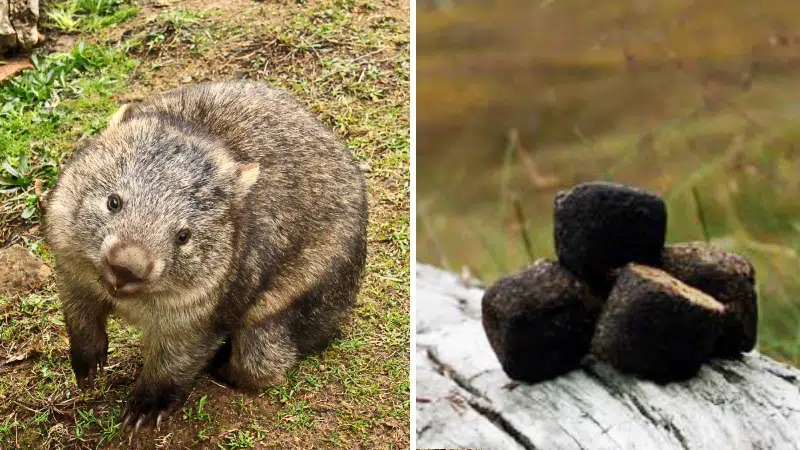
The wombat has a clever poo

That doesn’t do what most poos do

Most poops are round and roll away

But wombat turds are cubes — they stay!
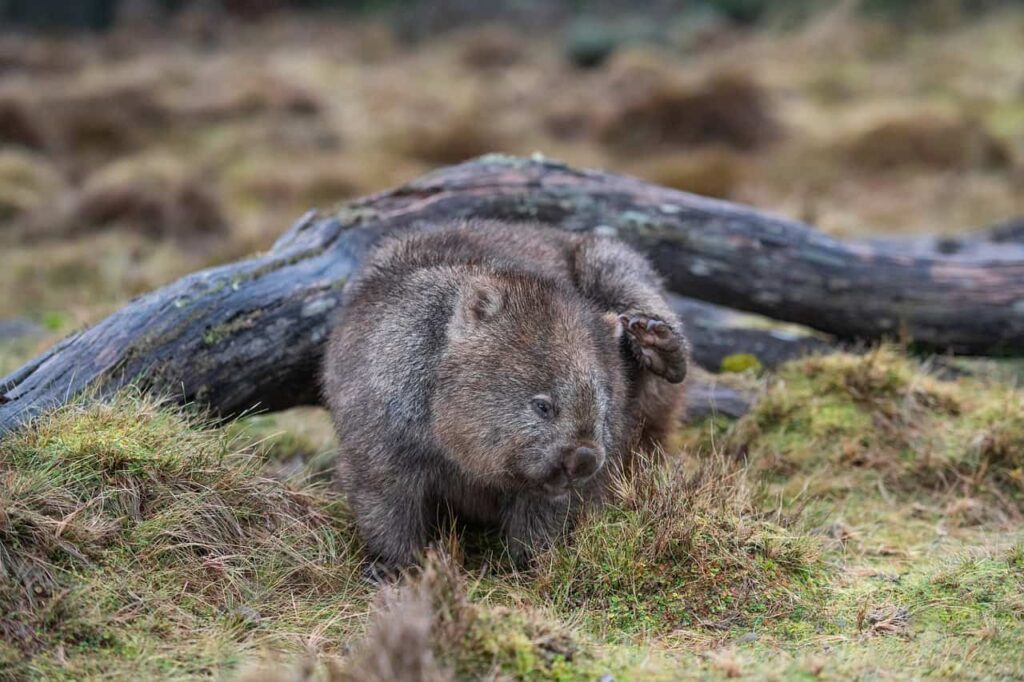

The cubic poops properly mark

Their boundaries on dirt and bark

Around each wombat neighborhood

They plot the place a wombat stood
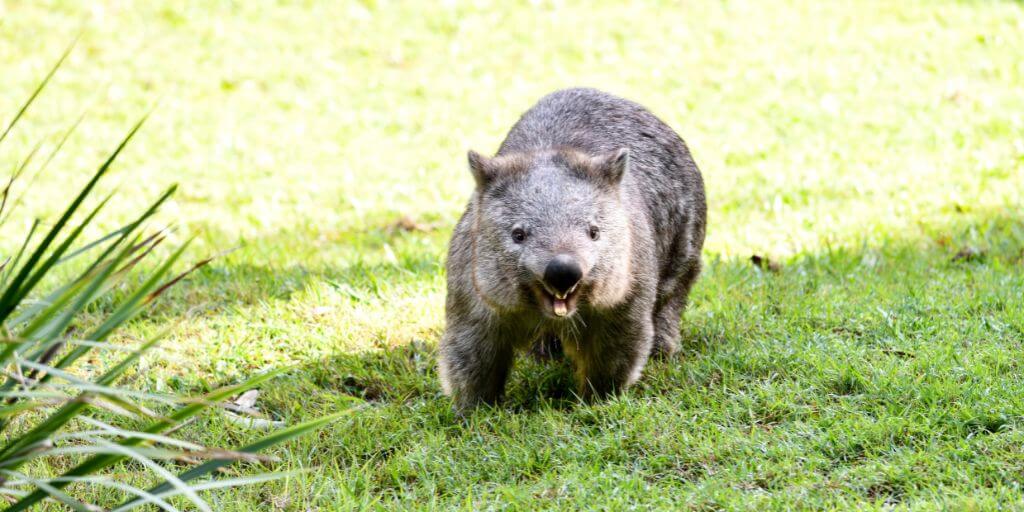

These critters love to live alone

So pungent cubes on log and stone

Work well to warn away stray pests

‘Cuz wombats do not welcome guests
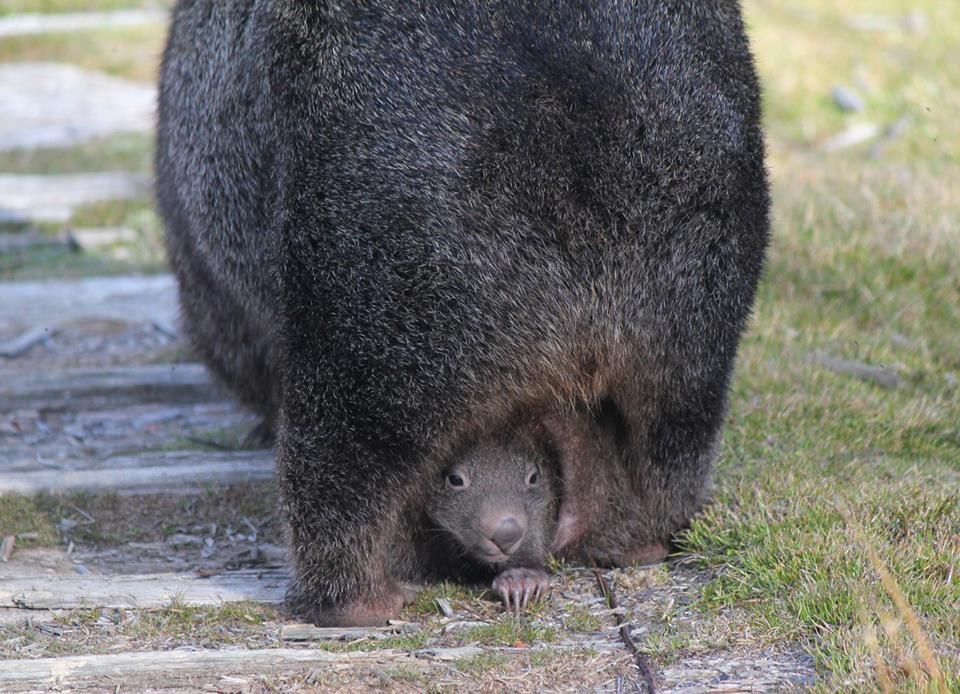

They sleep all day, these herbivores 

And seldom waddle out-of-doors

They’d rather snooze on burrow couches

Cuddling joeys in backward pouches


So if you go to the outback 

You might not meet a Jill or Jack

But you are sure to find some poo

That does not roll like most poos do

—- Ruth Gilmore Ingulsrud


Square poo? Yes, it’s true! Why and how? Perhaps it’s the result of three “square meals” a day? In any case, wombats like to have their own space. They’re a bit territorial. So producing poops that do not roll away is an advantage. It helps them mark the boundaries of their living space. Other wombats can see and smell these boundary markers and thus avoid a cantankerous encounter. Fighting is never welcome for a wombat. Even though they rhyme with combat.

So how in the world does the body of a wombat produce a cube-shaped dropping? Amazingly, they produce about a hundred of these six-sided doo-doos every day. They have a unique intestinal structure. Their guts are different from other animals. Some sections are like very stiff rubber bands while other sections are softer and have more give to them. Wombats are herbivores; they mostly eat grasses along with some other plants. They live in fairly dry environments and need to squeeze all of the moisture and nutrients from the food that they eat. As the food moves through the intestines, the squeezing action forms the excrement, (poop), into a cube shape. The stiffer grooves in the intestines create flat sides and the softer areas help form the edges and corners of the cubes.

After a long trek through the innards of the wombat… out pops a cubic poop. The boxier the cube, the healthier the wombat. Joeys, or baby wombats, are carried in the mommy’s pouch. Unlike most marsupials (pouch-bearing mammals), the wombats’ pouches face backwards. This helps to keep the little ones clean while the mommy forages for food and digs burrows with her short legs and her belly close to the ground.

Perhaps the joeys watch the little blocks popping out behind as mamma-wombat waddles forward. The poops may look like little building blocks, but I don’t think the wombat toddlers spend any time stacking them up. They’re too busy learning to waddle and munch and produce poop-cubes properly like their busy mammas.

For more information about wombats and their cube-shaped poops, check out these resources:

https://www.science.org/content/article/how-do-wombats-poop-cubes-scientists-get-bottom-mystery

https://phys.org/news/2025-12-wombats-square-poop.html#google_vignette

https://scitechdaily.com/how-wombats-produce-cube-shaped-poo-through-a-round-hole

Snubbed and Blue


Don’t snub me ‘cause my face is blue

From: elelur.com

I’d rather look like me than you

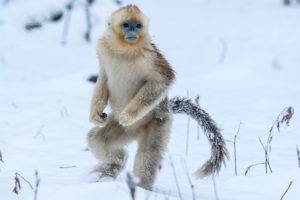
I sport a golden, flowing cape

My long tail shows I’m not an ape


I live up high among the trees

If I could talk, I’d speak Chinese

I like tree lichen for a snack

My meals are plants; they don’t attack


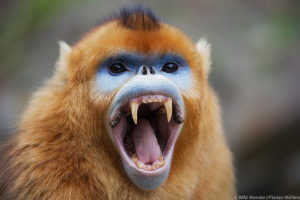
My canines might be sharp and long

From: WildWondersofChina.com

They grow for show; don’t get me wrong

I’ll use my teeth for self defense

And show them off if I get tense


But mostly I just like to cuddle

To survive, we monkeys huddle

Days are short and nights are cold

It helps to have some friends to hold


My bluish face and lack of nose  

Is from the coldness, I suppose

And if you lived where my kind do

You’d probably have a blue face too


— Ruth Gilmore Ingulsrud


The Snub-Nosed Sichuan monkey is a unique creature that lives in the remote and mountainous regions of central and southwestern China. It is also called the “Blue-Cheeked Monkey” and the “Chinese Golden Monkey.” No other primate can survive such extreme temperatures. Scientists are not sure why this monkey’s face is blue… it’s not really because of the cold. But the adaptation of no protruding nasal bone structures resulting in its snub-nosed appearance, might prevent this little guy from getting a frost-bitten nose. There’s no nose for the frost to bite!

The Snub-Nosed Golden Monkey also has thick fur for insulation, and it has a habit of cuddling in groups when it is cold or threatened by predators with the babies in the middle of the huddle for warmth and protection. They are usually gentle creatures who eat plants, including lichen which comprise a large portion of their diet. Those long canine teeth are for expressing bravado or fear; they do not mean that it is a carnivore. They will defend their territories against other bands of monkeys and can use their teeth to fight off predators such as wolves, foxes, weasels and raptors.

These fascinating beloved beasts are in danger of disappearing altogether as their habitat disappears and, despite protections, they are hunted illegally for their meat and fur. One group of these monkeys, the Hubei golden snub-nosed monkeys, have only 1,000 to 2,000 members left.

There is an old Chinese legend about a warrior monkey named Sun Wukong who had supernatural powers. If attacked, Sun Wukong could create an army by turning each of his long guard hairs into an powerful warrior, a clone of himself. Unfortunately, these little creatures cannot actually clone themselves and their numbers continue to dwindle. They need our help and protection.

The Nature Conservancy is one group that is working to save populations of the rare snub-nosed monkeys. A determined and dedicated biologist, Long Yongcheng, worked for many long years, with help from the Nature Conservancy, to save these monkeys. He succeeded in getting areas of forest set aside for habitat reserved for the snub-nosed monkeys. One person can make a difference in saving an entire species.

Photo Ark

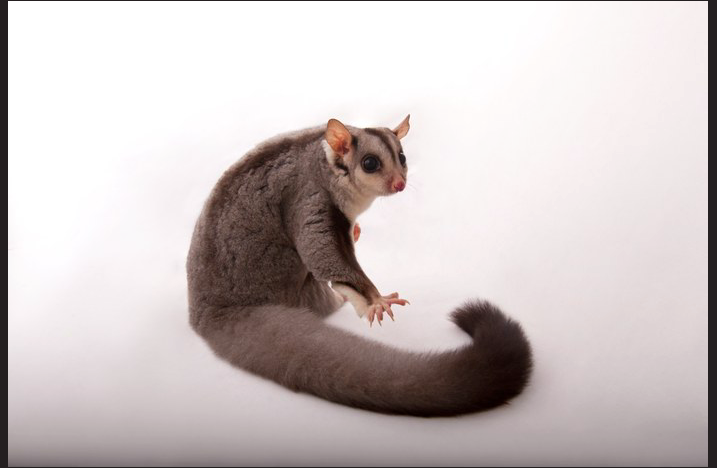
Joel Sartore's Mahogany Glider

Mahogany Glider

Modern day digital Noah and conservationist, Joel Sartore, is documenting the astounding beauty and variety of the world of beasts. “When we save species,” he wisely observes, “we are saving ourselves.” He has worked for many years as a freelance photographer for National Geographic magazine and has a knack of capturing the vibrancy of life in each creature that he captures on film.

His beautiful animal images have been projected with light on a grand scale against famous landmarks such as the Vatican in Rome, and the Empire State Building in New York.

A Sumatran tiger is projected onto the Vatican in an effort to raise awareness for the extinction crisis.

“My goal is to photograph as many of the world’s captive species as I can before time runs out” states Joel. “I’m at about 3,500 now, and just getting started. I work mostly at zoos and aquariums, today’s keepers of the kingdom. Many species would already be gone without their heroic captive-breeding efforts.”

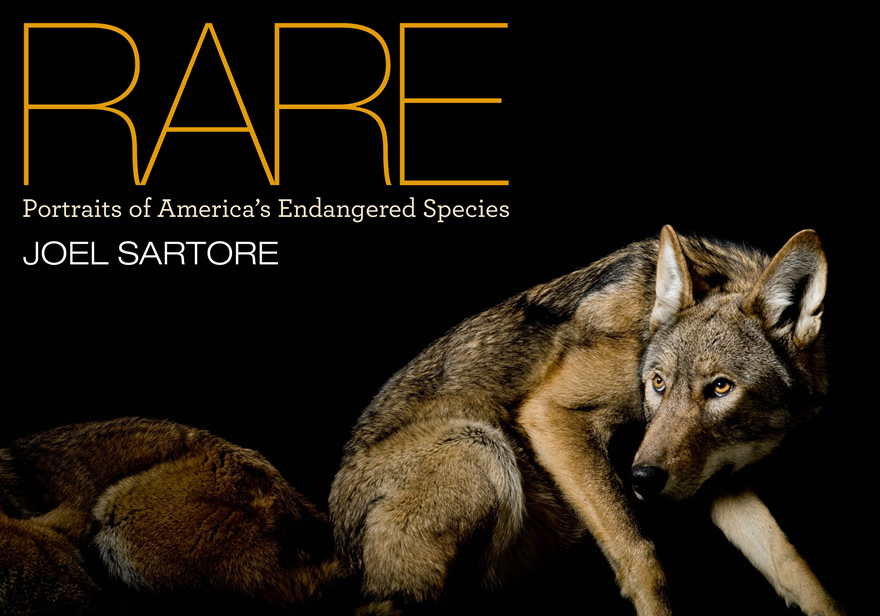
His beautiful and informative book, “Rare: Portraits of America’s Endangered Species,” attempts to give a voice to the disappearing beloved beasts of our time. There is still hope, Sartore explains, but we need to act now before these animals disappear forever.

rare-book-cover